Call Us: 804-518-8332
Call Us: 804-518-8332

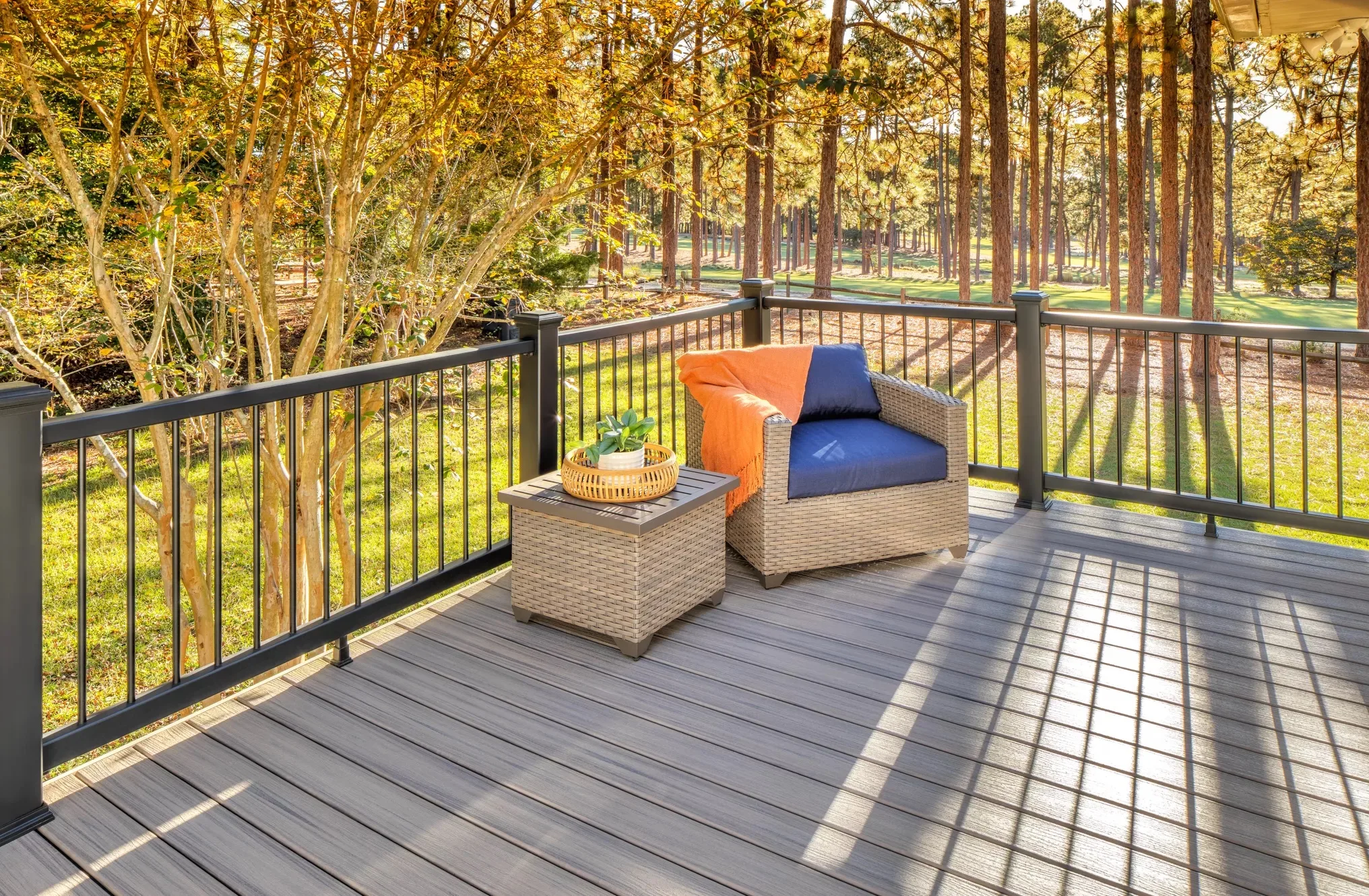
If you’re building a deck near the coast in Virginia, the materials you choose will directly affect how long it lasts. Salt air, humidity, and coastal storms create a harsh environment that accelerates corrosion, fading, and material breakdown. This guide breaks down the best decking materials for coastal homes in Virginia, focusing on durability, salt air resistance, and long-term value. We will cover composite decking, wood options, aluminum framing, and other alternatives to help homeowners make informed decisions before hiring a contractor.
Salt air in Coastal Virginia contains airborne salts that accelerate corrosion and material degradation. This environment causes faster fading, rot, and structural damage compared to inland areas. Salt particles attract and hold moisture, increasing the risk of corrosion and decay, especially in materials not designed for coastal exposure.
In coastal areas, we often see fasteners corrode before the decking fails—especially when standard hardware is used instead of stainless or coated connectors. Salt air doesn’t just affect the surface—corrosion can happen underneath the deck, especially in joists and connectors where moisture gets trapped. We also see framing failures in which moisture gets trapped and corrosion spreads without being visible on the surface.
The best decking materials for salt air resistance in Coastal Virginia combine durability with moisture and corrosion resistance. These include:
| Material | Salt Air Resistance | Lifespan Near Coast |
| Composite Decking | High resistance to rot, fading, and salt corrosion | 25-30 years |
| PVC Decking | Excellent moisture and salt resistance | 25-30 years |
| Marine-Grade Wood | Good resistance when properly treated | 15-20 years |
| Pressure-Treated Wood | Moderate resistance; requires maintenance | 10-15 years |
| Aluminum Deck Framing | Excellent corrosion resistance | 30+ years |
Composite and PVC decking are top choices for salt air resistance, offering long lifespans and minimal fading. Marine-grade wood performs well if properly maintained, while pressure-treated wood is less durable in salt air. Aluminum framing is highly resistant to corrosion and often used in combination with other decking materials.
Yes, composite decking is an excellent choice for coastal homes due to its superior resistance to salt air, moisture, and UV damage. It does not absorb water, preventing warping and rot common in wood decks. Composite decking also resists fading and corrosion better than traditional materials, making it a durable, low-maintenance option for Coastal Virginia.
Wood decking can perform adequately in salt-heavy environments if it is marine-grade or pressure-treated and properly maintained. However, wood is naturally more susceptible to moisture absorption, rot, and salt air damage than synthetic materials.
Pressure-treated wood is chemically treated to resist rot and insects, but requires regular sealing to protect against salt air damage. Hardwood decking, such as ipe or teak, offers better natural durability and salt resistance but comes at a higher cost and still needs maintenance to prevent weathering.
Aluminum deck framing is highly recommended for coastal environments due to its excellent corrosion resistance and structural strength. While aluminum decking boards are less common, aluminum framing combined with composite or PVC decking provides a durable, salt-resistant solution. Other alternatives, like PVC decking, offer excellent moisture resistance and longevity.
High humidity and moisture in Coastal Virginia accelerate deck material degradation by promoting rot, mold, and corrosion. Materials that absorb moisture, like untreated wood, deteriorate faster. Moisture-resistant materials such as composite, PVC, and aluminum framing extend deck lifespan by minimizing water absorption and damage.
Composite decking and PVC decking typically last the longest near the coast, with lifespans of 25-30 years or more. Aluminum framing can last 30+ years. Marine-grade wood can last 15-20 years if properly maintained, while pressure-treated wood generally lasts 10-15 years in coastal conditions. In coastal environments, lower-grade materials can begin to show signs of corrosion or wear within just a few years.
While composite and PVC decking have higher upfront costs, their durability and low maintenance often result in better long-term value. Wood decking has lower initial costs but higher maintenance expenses and a shorter lifespan.
Homeowners should avoid selecting materials not designed for salt air exposure, such as untreated wood or standard steel fasteners. Using non-corrosion-resistant hardware and neglecting professional consultation can lead to premature deck failure. Avoid underestimating the impact of humidity and salt air on deck materials. Based on our experience designing and building decks for coastal homes across Virginia Beach and the Hampton Roads area, improper fastener selection and ignoring under-deck corrosion issues are among the most common causes of early deck problems.
The best salt-resistant decking for Coastal Virginia homes balances durability, salt air resistance, and long-term value. Composite decking combined with aluminum framing offers superior resistance to salt air, moisture, and UV exposure, making it the top recommendation. PVC decking is a close alternative with similar benefits. Marine-grade wood is suitable for those seeking a natural look but requires more maintenance. Consulting with local Coastal Virginia deck contractors ensures you select materials and installation practices tailored to your environment.
Choosing the right decking for a coastal home comes down to selecting materials that can handle constant salt, moisture, and sun exposure. In most cases, composite or PVC decking combined with corrosion-resistant framing will give you the best long-term results.
In areas like Virginia Beach and Hampton Roads, small decisions—like the type of fasteners or how the framing is built—can have a big impact on how well your deck holds up over time. Working with a contractor familiar with coastal conditions helps ensure those details are handled correctly from the start.