Call Us: 804-518-8332
Call Us: 804-518-8332

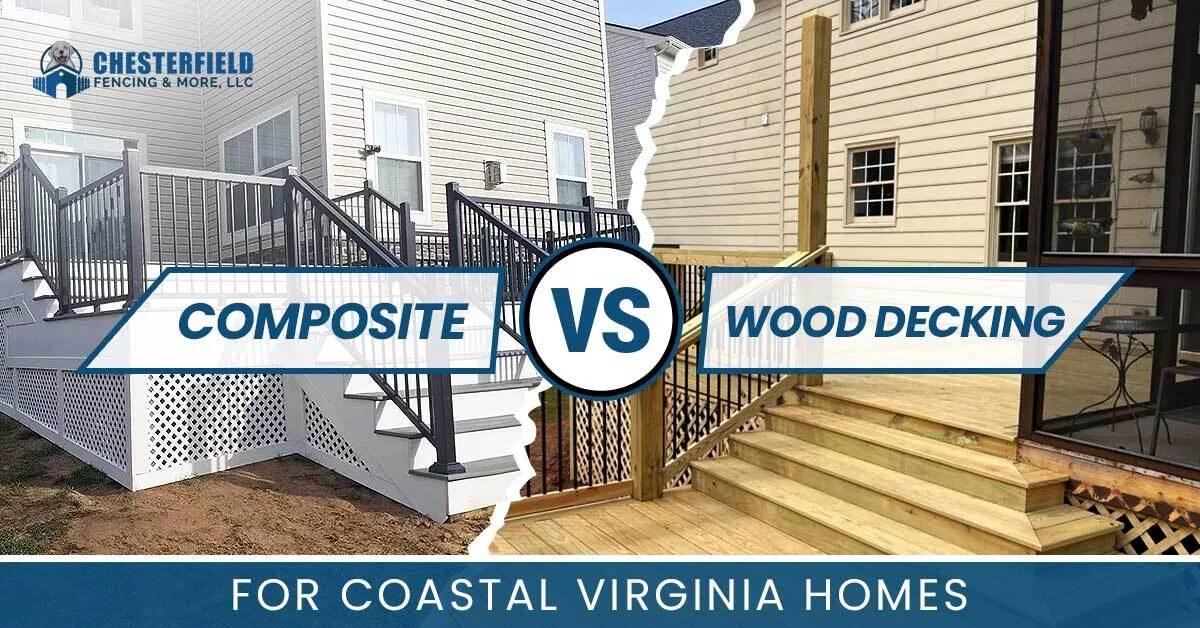
Choosing the best decking material for Coastal Virginia homes requires understanding how composite and wood decking perform in this unique environment. Coastal Virginia’s humidity, salt air, and seasonal storms can significantly impact the lifespan of outdoor structures. Choosing the right decking material is especially important for homeowners who want a deck that lasts with minimal maintenance. This article compares composite vs wood decking for Coastal Virginia homes, focusing on cost, lifespan, climate performance, and long-term value to help you make an informed decision.
The primary difference lies in their composition and maintenance needs. Composite decking is made from a blend of recycled wood fibers and plastic, designed to resist moisture and decay. Wood decking, typically pressure-treated pine or cedar, is natural but requires regular upkeep to prevent rot and insect damage.
Yes, composite decking generally outperforms wood in Coastal Virginia due to its resistance to humidity, salt air, and coastal storms. It maintains its appearance and structural integrity longer with less frequent repairs.
Humidity and salt air accelerate wood deck deterioration by promoting rot, mold, and insect infestation. Coastal storms can cause physical damage and increase exposure to moisture, leading to faster wear.
Composite decking is engineered to withstand the challenges of coastal weather better than wood. Its synthetic components repel water and resist salt damage, reducing the risk of rot and decay.
Composite decking often lasts 25–35 years or more when installed properly, while wood decks may last 10–20 years, depending on maintenance and exposure to moisture.
Composite vs Wood Decking Lifespan in Coastal Virginia
| Material | Durability | Lifespan (Coastal Climate) | Climate Performance |
| Composite Decking | High resistance to rot, warping, and fading | 25-35+ years | Excellent moisture and salt air resistance |
| Wood Decking (Pressure-Treated) | Susceptible to rot, insect damage, and warping | 10-20 years with maintenance | Moderate; requires frequent sealing and repairs |
Composite decking has a higher upfront cost but lower maintenance expenses, while wood decking is cheaper initially but requires ongoing investment.
Composite decking generally adds more long-term value due to its durability and low maintenance, appealing to future homebuyers seeking low-maintenance outdoor spaces.
Wood decking may be preferable for homeowners prioritizing natural aesthetics or lower upfront costs and willing to commit to regular maintenance.
Coastal Virginia’s climate creates unique challenges for outdoor structures. High humidity, salt carried in ocean air, and seasonal storms can accelerate wear on many building materials. Decks are especially vulnerable because they are constantly exposed to sun, rain, and moisture from the ground below.
Salt air can corrode metal fasteners and hardware over time, which is why coastal decks often require stainless steel or coated fasteners. Humidity also slows the drying process for wood, increasing the risk of rot, mold growth, and insect activity.
Because of these conditions, homeowners in coastal areas often choose decking materials that resist moisture and require less frequent maintenance.
Maintenance requirements are one of the biggest differences between composite and wood decking. Wood decks require regular sealing, staining, or painting to protect the surface from moisture and sun exposure. In coastal climates, this maintenance may need to be done every one to three years, depending on exposure.
Composite decking requires much less upkeep. Most manufacturers recommend occasional cleaning with soap and water to remove dirt, pollen, or salt buildup. Because composite materials do not absorb moisture like wood, they do not require sealing or staining.
While wood decks can look beautiful when properly maintained, many homeowners choose composite because it significantly reduces the time and cost of ongoing maintenance.
Some homeowners worry that composite decking may become hotter than wood during the summer months. In direct sunlight, darker composite boards can retain heat, especially during Virginia’s hot and humid summers.
However, many modern composite decking products include heat-reflective technology or lighter color options to help them stay cooler. Choosing lighter deck colors and ensuring proper airflow beneath the deck can also reduce heat buildup.
Wood decking can also become hot in direct sun, particularly darker-stained surfaces. In most cases, comfort depends more on color choice and sun exposure than on the decking material itself.
For most homeowners in Coastal Virginia, composite decking offers superior durability, moisture resistance, and long-term value despite a higher initial cost. Wood decking remains an option for those who value natural aesthetics and lower upfront costs, but it requires ongoing maintenance to withstand coastal conditions.The right choice often depends on how much maintenance you are willing to handle and how exposed your deck will be to moisture and salt air. Consulting with a local deck contractor familiar with coastal conditions can help determine the best material for your home.