Call Us: 804-518-8332
Call Us: 804-518-8332

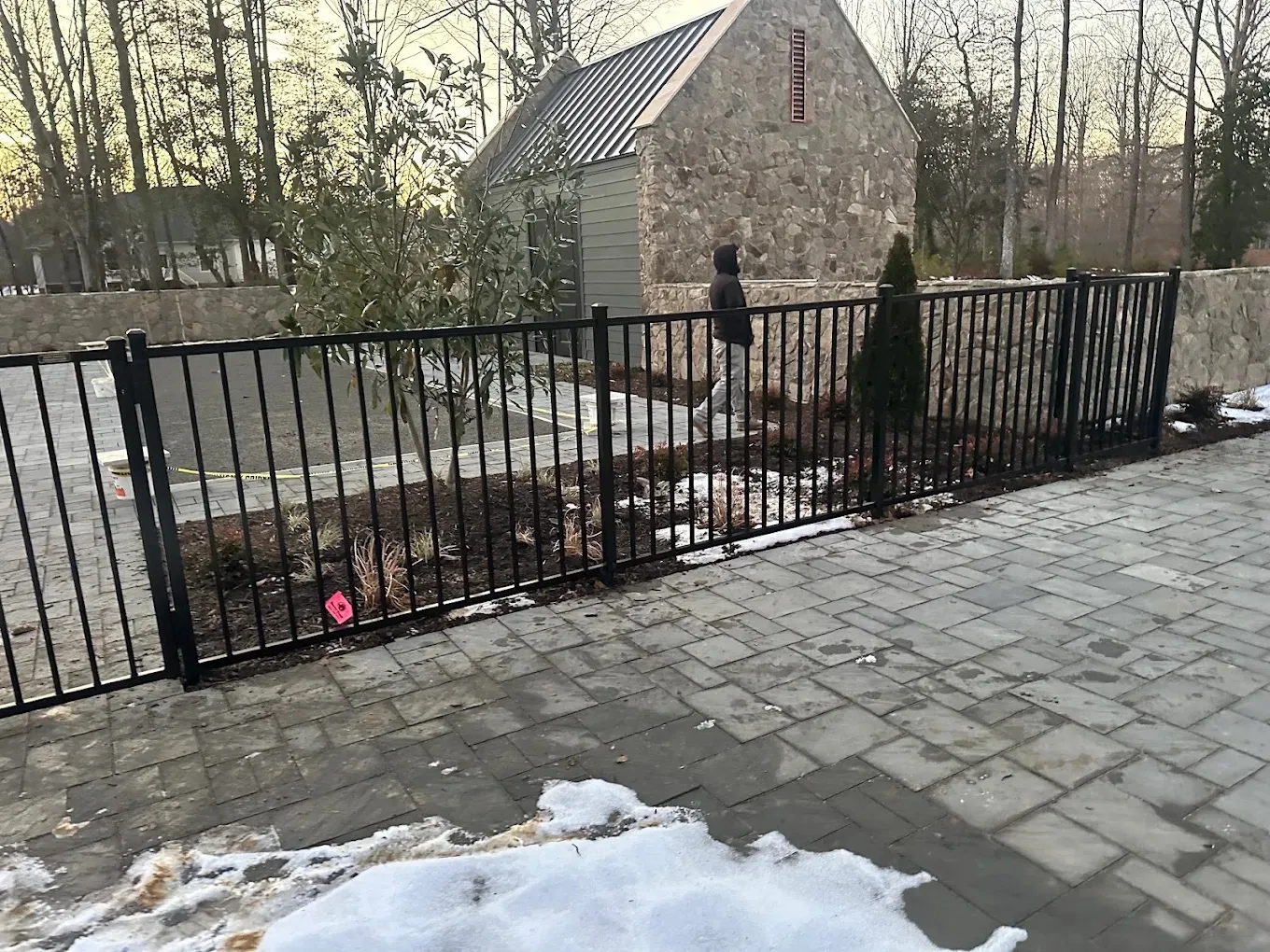
A waterfront fence has to balance competing priorities. The right residential fencing plan may need to preserve water views, create privacy around outdoor living areas, contain children or pets, support a pool barrier, and remain stable under coastal wind and wet soil conditions.
Those priorities may change from one side of the property to another. The water-facing boundary may need visibility and airflow, while a side yard, patio, street-facing area, or neighboring property may require stronger screening.
For many Virginia Beach waterfront homes, an open fence is the more practical choice where views and reduced wind pressure matter most. Privacy fencing may be more appropriate where the goal is to block direct sightlines or create separation around patios, pools, and frequently used outdoor spaces.
The fence material should follow the purpose of each boundary. Ornamental aluminum is commonly used for open sections, while vinyl or wood may be considered where greater privacy is needed.
This guide compares open and privacy fencing based on views, wind exposure, privacy, property layout, coastal conditions, access, local requirements, cost, and long-term performance.
An open fence is often the more practical choice along the water-facing side of a Virginia Beach property, while privacy fencing may work better along side yards, streets, neighboring patios, or service areas.
For example, a homeowner may use open aluminum fencing along a canal, bay, or water-facing boundary while installing vinyl privacy panels beside a patio or neighboring property.
An open fence generally offers:
A privacy fence generally offers:
Neither option is universally better. The right design depends on the purpose and exposure of each fence run.
An open fence uses spaced pickets or rails that allow visibility and airflow, while a privacy fence uses solid or closely fitted panels to block most direct views.
Ornamental aluminum is a common open-style option. It defines the property while preserving water views and allowing coastal wind to pass through.
Vinyl is a common privacy-fence material because solid panels block most ground-level sightlines and resist moisture, rot, and insects. However, large solid panels receive more wind pressure than open aluminum pickets.
| Comparison Factor | Open Fence | Privacy Fence |
| Privacy | Low to moderate | High for most ground-level views |
| Water views | Preserves visibility | Blocks or reduces views |
| Airflow | High | Low |
| Wind pressure | Lower because air passes through | Higher because panels catch more wind |
| Typical material | Ornamental aluminum | Solid vinyl or wood |
| Salt exposure | Coating and hardware quality matter | Fasteners, reinforcement, and hardware still matter |
| Pool use | Can work when barrier rules are met | Can also work when barrier rules are met |
| Pet containment | Depends on picket spacing and height | Often provides stronger visual containment |
| Curb appeal | Open, decorative, and architectural | Clean, enclosed, and private |
| Best location | Water-facing boundaries and exposed yards | Side yards, streets, patios, and close neighbors |
| Cost | Often higher per foot for aluminum | Varies by vinyl grade, height, reinforcement, and layout |
The table provides a starting point, but product quality, installation details, and site conditions often matter more than the style category alone.
An open fence preserves views, improves airflow, and reduces the surface area exposed to coastal wind.
This makes open aluminum fencing a strong option when the water is one of the property’s defining features. Homeowners can mark the yard boundary without creating a solid wall between the home and the waterfront.
Common advantages include:
Open fencing also makes it easier to see through the yard. That can be helpful for supervision, but it does not provide meaningful screening from neighboring or public areas.
An open fence preserves water views by using narrow pickets and visual openings rather than solid panels.
Picket width, spacing, fence height, post size, rail placement, and the elevation of the patio or deck all influence how much of the view remains visible.
Homeowners should evaluate the fence from the places where they spend the most time, including:
A fence may look open while standing nearby but still interrupt the view from a seated position. Reviewing actual sightlines before installation helps avoid that problem.
An open fence generally experiences less direct wind pressure because air can pass between the pickets.
Solid fences act more like a broad surface for wind to push against. Open aluminum fencing reduces that sail effect and lowers the structural demand on posts and footings.
That does not make every open fence storm-resistant. Long-term performance still depends on:
Fence failures often begin at posts, gates, hardware, or footings rather than in the center of the panel. Open design helps reduce pressure, but it does not replace proper installation.
A privacy fence is often the better choice when blocking ground-level views is more important than preserving the water view or maximizing airflow.
Waterfront properties may still sit close to neighboring homes, roads, public walkways, marinas, rental properties, or shared outdoor spaces.
Privacy fencing may be useful around:
A privacy fence does not have to surround the entire property. Targeted sections may solve the main sightline problem without blocking the water or placing a solid fence across the most exposed boundary.
A privacy fence may reduce some direct noise, but it should not be treated as soundproofing.
Solid, dense panels block more direct sound than open aluminum pickets. They may help soften nearby traffic, activity, or some wind-carried noise when the fence interrupts the direct line between the source and the listener.
The result depends on fence height, panel density, gaps, distance from the noise source, ground elevation, wind direction, and openings at gates or corners.
Open aluminum fencing provides little noise reduction because sound travels through the picket openings.
Aluminum and properly specified vinyl are both practical coastal materials, but they solve different problems.
Aluminum is generally better for open boundaries, views, airflow, and lower wind pressure. Vinyl is generally better for stronger privacy and resistance to moisture, rot, and insects.
Wood can also be used, but it is more vulnerable to repeated moisture, humidity, salt exposure, decay, and warping.
| Material Factor | Aluminum | Vinyl |
| Typical purpose | Open decorative boundary | Privacy and screening |
| Water views | Preserves views | Blocks views |
| Wind behavior | Open pickets reduce pressure | Solid panels create more wind load |
| Moisture resistance | Does not rot | Does not rot or absorb moisture |
| Salt exposure | Coating and hardware quality matter | Material does not rust, but hardware still matters |
| Privacy | Limited | Strong |
| Pool use | Common when code-compliant | Also possible when code-compliant |
| Quality factors | Powder coating, rails, pickets, fasteners, gates | Wall thickness, UV protection, reinforcement, rails, posts |
| Installation concerns | Post stability, hardware corrosion, gate alignment | Reinforcement, panel flex, post spacing, footing design |
Aluminum does not rust like untreated steel, but exposed hinges, latches, screws, fasteners, and damaged coating still affect long-term performance. Vinyl avoids corrosion and rot, but large panels can flex or place substantial force on posts during storms.
For exposed runs, homeowners should confirm that the vinyl system is rated or specified for the intended height, post spacing, reinforcement, and wind exposure.
The material should be evaluated as part of a complete fence system rather than selected based on one general benefit.
Salt air accelerates deterioration in coatings, fasteners, hinges, latches, screws, gate hardware, and other exposed metal components.
Even when the main fence material does not rust, its connections may still be vulnerable. Aluminum performance depends on coating quality and corrosion-resistant hardware, while vinyl fences still rely on metal fasteners, reinforcement, and gate components.
Coastal material planning should consider:
Hardware closest to direct salt spray may require more frequent inspection than components in a protected yard.
Coastal winds place greater demand on solid panels, tall fence runs, gates, posts, and footings.
A privacy fence catches more wind because it presents a broad surface. An open fence allows pressure relief, but both styles must be installed for the property’s actual exposure.
Fence design should account for:
Solid fences can perform well when properly reinforced, but they generally require more structural support than open fencing in exposed locations.
On exposed waterfront runs, vinyl privacy panels may need stronger posts, closer spacing, reinforced rails, or manufacturer-approved wind details.
Posts and gates often carry the greatest structural load during coastal storms.
A solid panel transfers wind pressure into the rails and posts. If the soil is loose, saturated, or sandy, the footing may shift even when the panel itself remains intact.
Gates create additional stress because they are heavier, move repeatedly, and depend on hinges and latches. Large privacy gates may require stronger posts and additional reinforcement.
A waterfront fence should therefore be evaluated as a complete load path from the pickets or panels into the rails, posts, footings, gates, and soil.
Yes. Virginia Beach zoning, easements, floodplain conditions, wetlands requirements, Chesapeake Bay Preservation Area rules, resort-area standards, neighborhood covenants, and HOA rules may restrict fence height, location, opacity, style, or material.
Waterfront properties may require more review than an ordinary interior lot. Approval may depend on proximity to a public right-of-way, pool-barrier use, easements, lot configuration, waterfront conditions, wetlands, floodplain status, CBPA requirements, or resort-area review.
Important approval questions include:
HOA approval is separate from city approval. A design accepted by one may still require review by the other.
Before digging, underground utilities should be marked through Miss Utility at 811. Property lines and easements should also be confirmed before the layout is finalized.
The best fence style depends on whether the property faces a protected canal, an open bay, the ocean, a street, or nearby homes.
Two waterfront homes in Virginia Beach may have very different wind exposure, sightlines, drainage, soil conditions, and neighborhood restrictions.
Docks, bulkheads, shoreline access, drainage structures, and pathways to the water can also affect where posts and gates can be placed.
A canal-front home may benefit from open fencing across the water side and selective privacy fencing along neighboring boundaries.
Canals preserve valued views, but homes may sit close together. Privacy may be needed near side patios while an open rear fence preserves visibility toward the water.
Factors to consider include dock access, pet containment, yard elevation, drainage, bulkheads, shared side-yard views, and HOA requirements.
A mixed design is often more practical than choosing one fence style for every side.
A bay-front home often benefits from an open fence because broad water views and stronger wind exposure are usually major considerations.
Open aluminum fencing can define the yard while reducing visual obstruction and direct wind pressure. Privacy panels may still be useful near side patios, pools, outdoor showers, or neighboring homes.
The most exposed boundary should receive careful review of posts, gates, footings, coating, and hardware.
An oceanfront or highly exposed property usually places the greatest demand on fence materials and installation.
Salt spray, strong prevailing winds, blowing sand, storm conditions, flood exposure, and local review requirements may all affect the design.
Open fencing often makes sense where views and pressure relief are priorities. A solid privacy fence may still be possible in selected locations, but it should not be treated as a standard inland installation.
Either style may work around a pool, but the fence must satisfy current pool-barrier requirements.
Open aluminum fencing is common because it allows visibility into the pool area. Privacy fencing may be preferred when stronger screening from neighbors or public areas is important.
Pool-fence planning may involve:
A decorative open fence should not be assumed compliant based on appearance alone. A solid privacy fence may also require specific gate and barrier details.
The pool layout, water views, wind exposure, pet needs, and current local requirements should be reviewed together.
The fence that preserves the property’s defining feature while solving the real privacy need is more likely to support buyer appeal.
For many waterfront homes, an open fence protects the water view and maintains a sense of space. A privacy fence may provide more value when the property sits close to neighbors, a roadway, public access, or an active marina.
The most private or most expensive fence does not automatically add the most value. The better choice is the one that fits the home, preserves useful views, performs in coastal exposure, and addresses the property’s actual privacy or containment needs.
Open aluminum fencing often has a higher material cost per foot, while vinyl privacy pricing depends heavily on panel grade, height, reinforcement, posts, and wind exposure.
Broad online planning ranges can be useful for early budgeting, but waterfront site conditions and installation requirements can change the final proposal substantially.
Important cost factors include:
A solid privacy fence may require more reinforcement on an exposed lot. An open aluminum fence may cost more in materials while placing less direct wind demand on the structure.
The most useful comparison is a written estimate based on the same layout, gate plan, height, site conditions, and approval requirements.
Homeowners should confirm that each contractor is pricing the same fence location, material quality, structural details, and approval scope.
Ask:
Two estimates labeled “aluminum fence” or “vinyl privacy fence” may include very different products and installation details.
An open fence is usually the stronger choice when preserving the water view, maintaining airflow, and reducing direct wind pressure are the main priorities.
A privacy fence may be the better choice when screening side yards, nearby homes, roads, patios, pools, or outdoor living areas matters more than maintaining an open view.
Many waterfront properties benefit from a combined design: open fencing along the water and targeted privacy fencing where sightlines need to be blocked.
The right fence is not simply the most open or the most private. It is the design that fits each boundary and performs under the property’s actual conditions.
If you are comparing open aluminum fencing and privacy fencing for a Virginia Beach waterfront property, contact Chesterfield Fencing & More to review your views, privacy goals, coastal exposure, yard layout, gates, drainage, soil conditions, waterfront access, and local approval requirements.