Call Us: 804-518-8332
Call Us: 804-518-8332
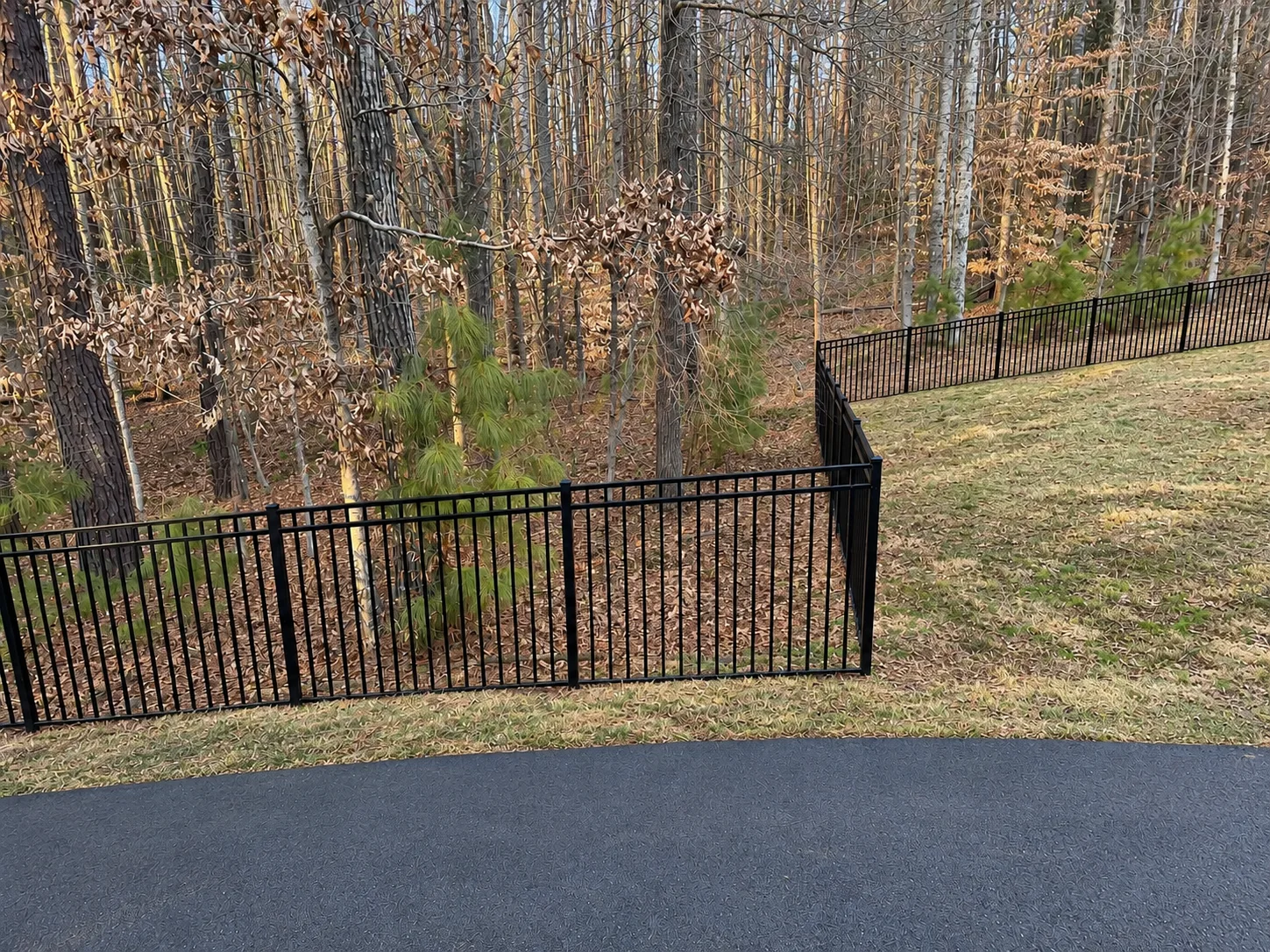
Yes, many aluminum fence systems can follow a sloped yard without being installed in a stair-step pattern. This is typically done by “racking” compatible panels so the rails angle while the pickets remain vertical.
Racking usually works best on gradual, consistent slopes. Steeper hills, abrupt grade changes, drainage swales, or uneven terrain may require stepping, custom adjustments, or a different layout.
A simple way to think about it is:
gradual slope + compatible rackable panels = fence that can follow the grade without a stair-step appearance
The installer should confirm the rack limit for the exact panel style being installed, not just the product category.
Racking means adjusting a compatible aluminum fence panel so it follows the angle of the ground instead of remaining completely level.
The rails angle with the slope while the pickets generally remain vertical. This allows the bottom of the fence to follow the grade more closely.
Racking can help create:
Not every aluminum panel is equally rackable, so the fence system has to be selected with the slope in mind.
A racked fence follows the slope, while a stepped fence keeps each panel level and changes elevation between sections.
Both methods can work, but they create different appearances and different amounts of clearance beneath the fence.
| Comparison Factor | Racked Fence | Stepped Fence |
| Appearance | Follows the grade smoothly | Creates a stair-step pattern |
| Panel orientation | Rails angle with the slope | Panels remain level |
| Ground gaps | Usually smaller and more consistent | Can create triangular gaps beneath panels |
| Slope suitability | Best for gradual, consistent slopes within panel limits | Useful for steeper or abrupt grade changes |
| Pet considerations | May reduce larger bottom gaps | Gaps may need additional planning |
| Best applications | Rolling or gradually sloped yards | Steep, irregular, or rapidly changing grades |
Neither method is automatically better.
The right choice depends on the slope, panel system, desired appearance, and how the property will use the fence.
Racking is often preferred because it lets the fence visually follow the terrain instead of creating repeated horizontal steps.
It can also keep the bottom edge closer to the ground on a consistent slope.
On some panel styles, racking can slightly change the visual spacing or angle of rails, so the finished appearance should be reviewed before installation.
The best results usually come from slopes that change gradually rather than suddenly.
There is no universal maximum slope that applies to every aluminum fence.
Rackability depends on the exact panel design, picket spacing, rail construction, panel width, and manufacturer specifications.
Factors that affect rackability include:
The installer should confirm the allowable rack range for the exact fence system before assuming it can follow the yard.
It can. Racking usually helps reduce large gaps, but it does not guarantee a completely gap-free fence.
Ground clearance still depends on how evenly the terrain changes beneath the panels.
A gradual slope may allow fairly consistent clearance. Uneven ground, low spots, drainage areas, roots, or sudden elevation changes can still create larger spaces.
Yes, aluminum fencing can often follow rolling terrain when the grade changes are gradual enough for the selected panels.
Uneven terrain becomes more difficult when the ground changes direction quickly within a short distance.
A fence line may include:
One property may use racking for most of the fence and another method in isolated sections.
The layout does not have to use only one technique from beginning to end.
Racking can be useful for pets because following the grade more closely may reduce large openings beneath the fence.
However, a racked aluminum fence should not be treated as escape-proof.
Pet containment also depends on:
A small dog may require more attention to ground clearance than a larger dog, even when the same fence system is used.
Gates require separate planning because they usually need a more predictable operating area than the surrounding fence panels.
A rackable fence panel can follow a slope, but a gate still has to open and close without dragging, binding, or creating excessive clearance.
Gate planning should account for:
As a result, gate placement may drive part of the overall fence layout on a sloped yard.
Sometimes moving a gate a short distance can create a more workable transition than trying to force it into the steepest part of the grade.
Stepping may make more sense when the slope is too steep or irregular for the selected panels to rack properly.
It can also be useful where the grade changes abruptly between otherwise level sections.
Stepping may be considered when:
Some properties may use a combination of racked and stepped sections.
The goal is to match the installation method to the terrain rather than force one approach across the entire yard.
It can, but a sloped yard does not automatically add a fixed amount to the project.
Cost may change when the terrain requires more layout work, specialized panels, additional grade transitions, custom sections, or more complicated gate placement.
Other factors still matter, including:
The slope should be considered as one part of the complete estimate.
Before choosing racking or stepping, the contractor should look at the actual grade along the proposed fence line.
Important conditions include:
If property lines or easements are uncertain, a survey may also be appropriate before the final fence location is established.
Before post holes are dug, homeowners should make sure Virginia 811 has been contacted so participating underground utilities can be located and marked. Private utilities, irrigation lines, or site lighting may require separate locating because they may not be marked through VA811.
Choose racking when the grade changes gradually and the selected aluminum panels can follow the slope within their designed rack range. Consider stepping or another approach when the terrain is too steep, changes abruptly, or creates clearance problems the panel system cannot accommodate.
The goal is not simply to avoid a stair-step appearance. The fence also needs appropriate ground clearance, workable gate locations, and a layout that fits the actual terrain.
For Richmond homeowners planning an aluminum fence on a sloped yard, Chesterfield Fencing & More can review the grade, panel rackability, gates, bottom clearance, and fence layout before the final installation method is selected.