Call Us: 804-518-8332
Call Us: 804-518-8332

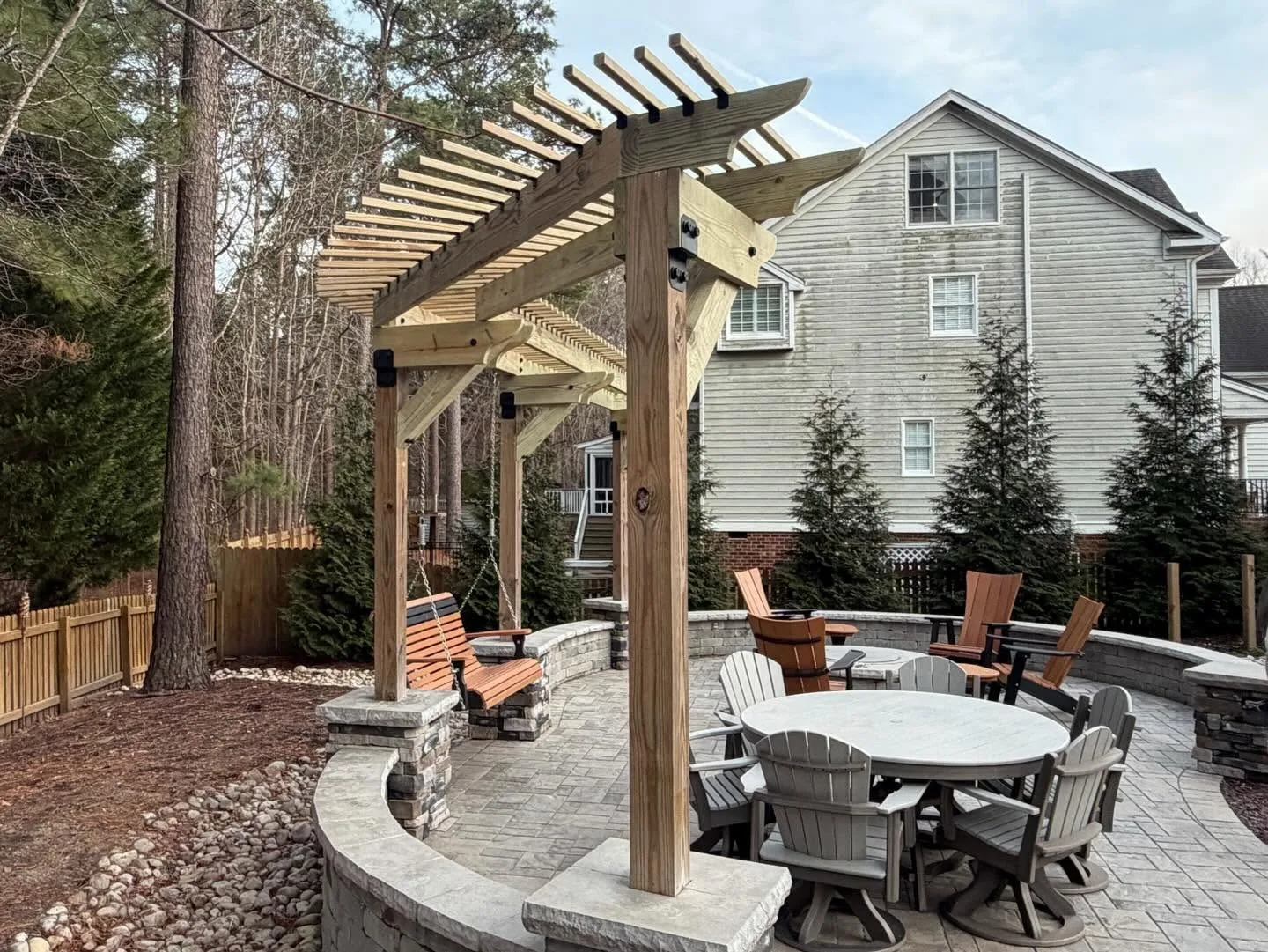
The best pergola position depends on where shade is needed and when the backyard is used most. For many homeowners, controlling intense afternoon sun over seating, dining, or entertaining areas is more valuable than simply placing the pergola in the sunniest part of the yard.
A practical way to evaluate placement is:
sun path + time of use + activity area + pergola design = effective shade placement
For Richmond homeowners, the pergola may work best beside the house, over a patio or deck, near a pool area, or farther into the yard. The right location depends on how sunlight moves across the property and whether the structure can also be installed appropriately in that location.
Start by identifying which outdoor area needs shade and when that space is used most. Those two factors are more useful than choosing a pergola location based only on which part of the yard receives the most sun.
The shaded area may include:
Then consider when people actually use that space.
If the family spends most evenings outside, afternoon and early-evening sun may matter more than morning exposure. If the pergola will mainly cover a breakfast patio, morning shade may deserve more attention.
Placement also has to work from a construction standpoint. Pergola location should account for post locations, footing conditions, drainage, utility lines, deck framing, patio edges, and access around the structure.
A shade-friendly location still has to be buildable.
There is no single compass direction that provides the most shade for every pergola. The best orientation depends on the property's sun exposure, surrounding structures, pergola design, and the time of day when shade matters most.
The house itself can significantly change the answer.
One backyard may already receive substantial shade from the home during part of the day, while another with a similar orientation may remain exposed until evening.
The sun changes position throughout the day and across the seasons. Trees, fences, neighboring homes, rooflines, and other structures also change where sunlight reaches the yard.
Two Richmond homes facing the same direction can therefore have very different shade patterns.
The more useful question is:
Where does direct sun reach the area you want to use during the times that matter most?
That answer provides a better starting point for pergola placement and orientation.
The sun's path determines where shadows fall and how those shadows move throughout the day. A pergola positioned effectively for morning shade may provide much less protection later in the afternoon.
Homeowners should look at least at:
Morning sun is generally lower in the sky and reaches the yard from the eastern side.
If the pergola will mainly be used for breakfast, coffee, or early outdoor seating, its location and overhead orientation should be evaluated for those lower morning angles.
The house, trees, or nearby structures may already provide part of the needed shade.
Midday sun is generally higher overhead, so the pergola's overhead structure becomes especially important.
Traditional open-roof pergolas can provide useful partial shade during these hours, but actual coverage depends on the spacing, depth, and orientation of the overhead members.
A pergola with wider spacing will create a different shade pattern than one with more closely spaced roof elements.
Afternoon sun often reaches outdoor areas from a lower angle and can travel beneath the pergola's overhead structure from the side.
If afternoon shade is the priority, placement should help position the pergola's shadow over the seating, dining, or entertaining area during those hours.
This is especially important for patios and decks that remain exposed to strong late-day sun.
If afternoon shade is the main goal, place the pergola so the late-day shadow falls across the area you want to use rather than away from it.
That may require a different location or orientation than a pergola designed primarily for midday use.
Consider:
If the backyard is used mainly after work or during dinner, protecting those hours may be more useful than maximizing shade earlier in the day.
Yes. The direction and spacing of a pergola's overhead members affect how sunlight passes through the structure and where shade falls.
However, pergola location and overhead orientation are separate decisions.
Pergola location answers:
Where should the structure sit in the backyard?
Overhead orientation answers:
How should the roof elements interact with sunlight from that location?
A well-positioned pergola can still provide disappointing shade if the overhead configuration does not match the sun angles during the intended use period.
Likewise, changing rafter orientation cannot fully compensate for placing the pergola in the wrong part of the yard.
An attached pergola often makes sense when the main goal is shading a patio, deck, or seating area directly beside the home. A freestanding pergola may work better when shade is needed farther into the backyard.
Neither option automatically provides better shade.
Consider an attached pergola when the outdoor use area is directly connected to the house.
This may work well for:
The home may also contribute shade during certain hours, allowing the building and pergola to work together.
Attached pergolas may also require review of the home's structure, roofline, drainage, flashing needs, and local permitting requirements before installation.
A freestanding pergola may be a better fit when the most useful shaded area is away from the house.
It can be positioned near a pool, over a separate seating area, in a garden space, or elsewhere in the yard where shade would provide the most benefit.
Its main advantage is placement flexibility. However, it does not automatically receive shade from the house, so the sun path becomes even more important.
A pergola should usually be positioned so its most useful shade falls over the portion of the patio or deck where people actually sit, dine, or gather.
It does not always need to be centered over the entire surface.
A large patio may contain separate zones for:
If afternoon shade matters most over the dining table, pergola placement should prioritize that area rather than trying to cover every part of the patio equally.
For a deck, framing, stairs, railings, door access, furniture placement, and structural support also influence where the pergola can reasonably be positioned.
A deck-mounted pergola should be reviewed for framing support and connection points before assuming the deck can carry the added structure.
Place a pergola where it creates useful shade without interfering with circulation, important sightlines, or access around the pool or entertaining area.
It does not necessarily need to sit directly beside the water.
A nearby shaded seating area may provide a place for:
The location should preserve comfortable movement between the house, pool deck, seating, and other backyard features.
Existing structures and landscaping can significantly influence the best pergola location because they already create shade at different times of day.
A pergola should work with those existing shadow patterns rather than being planned separately from them.
For example, the house may shade a patio in the morning but leave it exposed in late afternoon. A mature tree may protect one side of the yard, making another area the better location for a pergola.
Consider:
Deciduous trees can create substantial summer shade while allowing more sunlight through during cooler months, so seasonal conditions can affect the final decision.
In Richmond-area backyards, summer heat, afternoon sun, mature trees, clay soil, drainage, and storm exposure can all affect where a pergola should sit.
Sun exposure may determine where shade is most useful, while soil and drainage can influence whether the preferred post locations are practical.
Before final placement, the post locations should also be reviewed for utilities, irrigation lines, drainage lines, lighting wire, and other private systems that may not be obvious from the surface.
Setbacks, HOA rules, easements, and local permit requirements should also be checked before final placement, especially for attached structures or larger freestanding pergolas.
A location that performs well for shade still needs to work with the site's structural and planning conditions.
A traditional open-roof pergola generally provides partial, changing shade rather than complete all-day coverage.
Sunlight passes between the overhead members, and the resulting shadow pattern changes as the sun moves.
Actual shade coverage depends on:
Homeowners should not expect an open pergola to perform like a solid roof.
Its purpose is usually to reduce direct exposure and create a more comfortable outdoor area while maintaining an open structure.
Yes. Pergola height can affect how far shadows extend and how much lower-angle sunlight reaches beneath the structure.
There is no universal height that provides the best shade for every backyard.
A taller pergola may feel more open but allow more low-angle sunlight underneath. A lower structure may create a different shade pattern but also changes clearance, proportions, views, and how the pergola relates to nearby buildings.
Height should therefore be considered with the pergola footprint, overhead orientation, and surrounding backyard layout.
Compare possible locations by observing where sunlight falls during the times when the backyard is typically used.
The most useful comparison considers sun exposure, intended use, existing shade, pergola design, and buildability together.
| Shade Goal | Placement Priority | What to Evaluate |
| Morning shade | Protect areas exposed to early eastern sun | Breakfast seating, house shadow, low-angle sun |
| Midday shade | Position overhead coverage directly above the activity area | Roof spacing, orientation, pergola height |
| Afternoon shade | Place the structure so late-day shadows protect seating areas | Western exposure, side sunlight, house shade |
| Dining area | Prioritize shade over table and seating rather than the entire patio | Meal times, furniture layout, walking space |
| Poolside area | Create a shaded gathering area without limiting circulation or views | Pool access, seating, supervision sightlines |
| Patio or deck | Coordinate pergola footprint with the most-used zone | Doors, stairs, furniture, sun exposure, circulation |
It can help to observe the proposed area at several times during the day before the layout is finalized.
A location that appears ideal at noon may perform very differently at 5 p.m.
If the main goal is reducing heat and direct sunlight during the warmer outdoor season, summer sun exposure usually deserves the most attention.
Year-round use should still be considered if the backyard is regularly used during cooler months.
Because the sun's position changes through the seasons, pergola shade will not remain identical throughout the year.
The goal should be to prioritize the periods when the outdoor area matters most rather than expect identical shade coverage every month.
Decide when the space will be used, what needs shade, and whether the preferred location works structurally and functionally before choosing the final position.
Ask:
These questions provide a stronger basis for placement than compass direction alone.
The best pergola location is the one that puts useful shade over the space you want to use while also working with the property's layout, sun exposure, and construction conditions. For many Richmond homeowners, that means balancing afternoon sun protection with patio or deck use, existing shade, circulation, and practical post locations.
Richmond homeowners can contact Chesterfield Fencing & More to review sun exposure, patio or deck layout, post locations, existing shade, circulation, and pergola design before choosing a final placement.