Call Us: 804-518-8332
Call Us: 804-518-8332
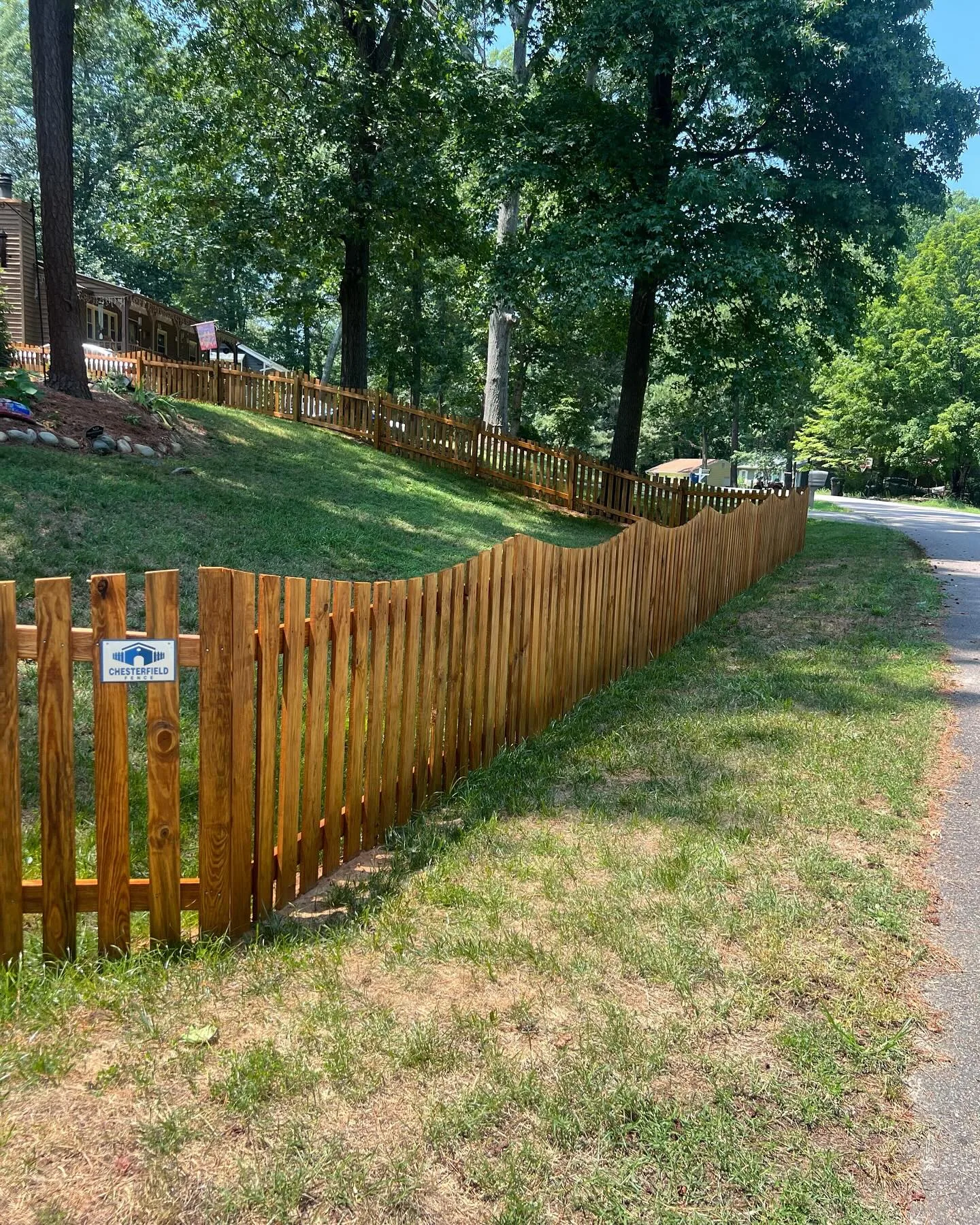
As the leader in residential fencing in Virginia Beach, Virginia, we’d like to share what you need to know about choosing the best fences for sloped yards, including which materials perform best and whether you need a racked fence design or stepped fence installation.
Fencing a sloped yard in our region can feel like trying to square a circle — at least until you know the right approach. At Chesterfield Fencing, we’ve helped countless local homeowners secure their properties, even on hills, dips, and irregular terrain.
With the right fence design and installation strategy, a sloped yard doesn’t have to be a problem. It can easily become one of your home’s standout features.
On flat terrain, fence installation is relatively straightforward. However, on sloped land, traditional fence panels can leave wide gaps under the rails and create uneven pressure on the posts, compromising both security and appearance.
That’s why careful planning is essential. A successful project hinges on accurate slope measurement, careful design work, and precise fence post leveling.
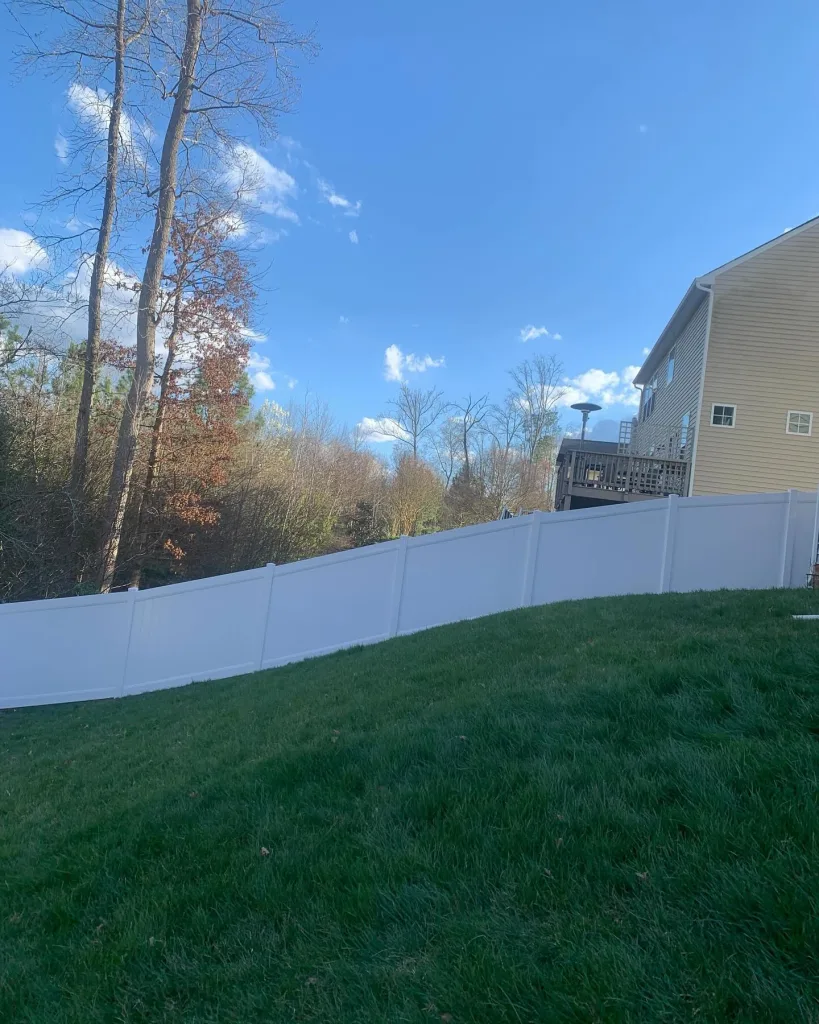
When it comes to fencing for sloped yards, two construction methods dominate: racked fence design and stepped fence installation. Each has strengths, depending on your terrain and priorities.
A racked fence allows panels to angle along the slope, creating a continuous line that hugs the ground. It’s best for gradual inclines and offers a sleek, gap-free look. This option works particularly well with fencing systems made of aluminum, vinyl, or wrought iron. Prefabricated or custom-racked panels can match your slope with precision.
While racked fences deliver outstanding curb appeal and help contain pets or children, they usually cost more because of custom fabrication and complex installation requirements.
By contrast, stepped fence installation works by placing each panel level and adjusting the post height at each step, resulting in a stair-step effect. This method is more common on steeper slopes or properties with terraced landscaping. It’s also easier to install using pre-made panels and works well with materials like wood and composite.
However, stepped fences often leave triangular gaps beneath the panels. These can reduce privacy and security unless you fill them in. Landscaping, filler boards, or minor terrain adjustments can sometimes close those gaps while maintaining a clean appearance.

As with level terrain, the performance and aesthetics of fences for sloped yards depend largely on your choice of appropriate fencing materials. Not all materials handle sloped land equally. For example, we recommend avoiding chain link fencing for steeper slopes, especially if privacy is important. Chain link fencing is difficult to adjust to slopes and often leaves large gaps that distract from visual appeal.
Aluminum fencing is lightweight, corrosion-resistant, and highly adaptable. It’s especially effective in racked fence design, thanks to flexible panels that follow the land naturally. It also holds up well in Richmond’s humid climate.
Vinyl fencing offers a low-maintenance solution and is widely favored for privacy. Many vinyl systems come in rackable styles, or we can adjust them on-site for gentle slopes. This option requires expert installation to avoid stress cracks on uneven terrain.
Wood fencing is the go-to material for stepped fence installation. It can be custom-built on-site, offering complete flexibility to match the grade. Wood is perfect for homeowners who want a natural look, but it does require more upkeep, including sealing and staining.
Composite fencing delivers the best of both worlds, combining the aesthetics of wood and the durability of vinyl. It works with either installation method, depending on the brand and design. Meanwhile, wrought iron fencing is an upscale, durable option often custom-fabricated to fit sloped yards, though it comes with a higher price tag and much more maintenance.
No matter which design or material you choose, successful installation depends on proper ground preparation. We suggest professional installation by your local Richmond fencing experts. Without expertise and attention to detail, even the best materials can fail prematurely on sloped land.
On a slope, we must set posts at varying depths while ensuring they remain perfectly vertical. We often use custom-shaped concrete footers to secure them. For steeper grades, minor grading or retaining walls can help stabilize the area.

Confirm your property lines and understand local regulations before any work begins. We sometimes find that fencing a slope reveals issues with past grading or boundary disputes.
Before digging, make sure you’ve checked local building codes, HOA rules, and permit requirements. A recent survey may be necessary if your property line grading is in question. It’s also wise to consider drainage patterns. Modifying a slope without planning for water runoff can cause erosion on neighboring property and unnecessary disputes.
There’s no one-size-fits-all answer regarding the best fences for sloped yards. For gentle slopes, a racked fence design using aluminum, vinyl, or wrought iron offers a seamless look. For steeper slopes, stepped fence installation with wood or composite materials provides structure and adaptability. Moderate slopes may benefit from a combination of both techniques, depending on the site layout and your privacy goals.
Trusting a local expert like Chesterfield Fencing ensures your design works with the land and not against it.
Building a fence on uneven terrain takes experience and careful planning — and at Chesterfield Fencing, we specialize in expert fence installation designed to meet the unique challenges of sloped yards.
Whether your yard has a gentle incline or a steeper slope, our team can help you explore the best materials and designs to create a secure, attractive boundary that lasts.
Explore Residential Fence Styles in Virginia Beach or Request a Free Sloped Yard Estimate from our team today.
Call us at 804-518-8332 to schedule a no-pressure on-site consultation and let’s find the right solution for your property.