Call Us: 804-518-8332
Call Us: 804-518-8332


Chain link fences are tough, practical, and low in maintenance. That doesn’t mean they don’t require some TLC. Whether you’re securing your backyard or protecting a commercial site, your fence needs regular attention to stay in top shape.
Chesterfield Fencing is the leading provider of professional-grade chain link fencing in Virginia Beach, Virginia, and we’d like to walk you through every major aspect of chain link fence maintenance. Let’s ensure your fence remains safe, functional, and attractive year after year.
Chain link fences are usually made from galvanized or vinyl-coated steel. Engineers design and choose these materials for their ability to resist rust and endure outdoor conditions. Nevertheless, exposure to weather, soil moisture, and nearby vegetation over time can lead to deterioration if the fence isn’t maintained.
Sagging rails, leaning posts, and structural weaknesses impact security and negatively impact curb appeal.
The good news is that staying on top of maintenance is straightforward, and most tasks only require basic tools and a little planning.

Make a solid habit of looking over your fencing to identify early signs of damage before it compromises your fence. In our area, where storms and seasonal shifts are common, we recommend inspecting your fence at least twice per year.
As you inspect your fence, keep an eye out for:
Pay close attention after heavy rainstorms or deep winter freezes. Saturated soil can shift fence foundations. Early detection lets you perform prompt chain link fence maintenance for simpler and less expensive repairs.
One of the simplest but most effective fence cleaning tips is to give your fence a seasonal scrub-down. Dirt, grime, and pollen buildup not only dull the look of your fence but also trap moisture that can accelerate rust and corrosion.
Here’s a simple approach:
Avoid bleach unless you’re dealing with visible mold or mildew. Even then, use it sparingly to avoid damaging protective coatings. For fences near industrial zones or construction sites, consider a commercial-grade degreaser.
Even galvanized fences can eventually corrode. Humid summers and wet winters in Virginia Beach make protection against moisture damage a top priority, especially in areas where water or soil touches the base of your fence.
Proactive steps include using outdoor metal paint with a built-in rust barrier and retouching or restoring protective coating according to the manufacturer’s guidelines.
Focus on gates, joints, and high-traffic areas where wear is most common. For older fencing, consider a full recoating every few years to extend its lifespan and maintain curb appeal.
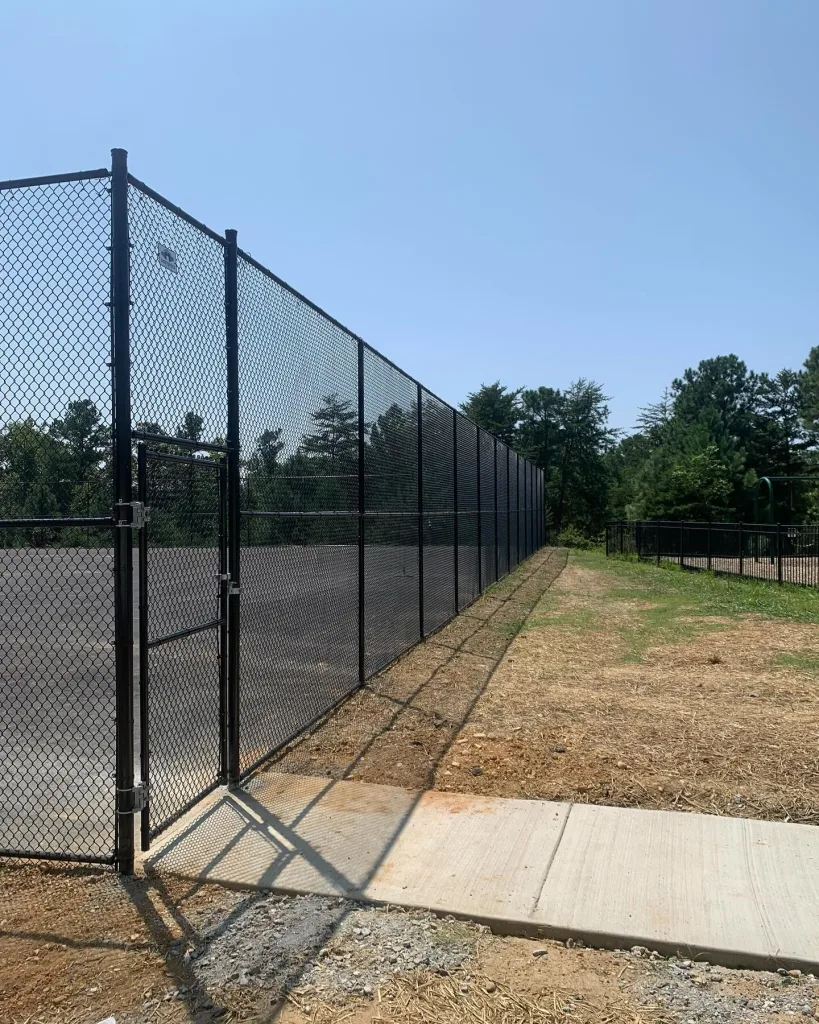
Overgrown plants may look harmless, but they can compromise chain link fence maintenance in several ways. Vines and shrubs trap moisture and encourage rust. Some plants exert much more pressure than you might think and can pull the mesh out of alignment.
In residential yards, trim bushes and mow grass regularly around the fence line. Leave a buffer zone of six to 12 inches between your fence and landscaping. For commercial and industrial sites, consider laying down a weed barrier or gravel strip and applying herbicides to prevent aggressive growth. In all cases, remove vines from your fencing as soon as they appear.
Once rust appears, it spreads fast. That’s why rust prevention should be an ongoing part of your fence maintenance routine. Richmond’s humid climate and seasonal rains make this even more important.
Here’s what you can do:
Unaddressed rust weakens the fence’s structural integrity and can lead to mesh failure or post collapse. Stay vigilant and act fast.
Whether it’s sagging wire, a misaligned gate, or a cracked post base, repairing damaged sections quickly helps preserve your entire fence line.
Common chain link fence maintenance and repair needs include:
While we focus on new installations and full replacements, we’re happy to advise you when it’s time to replace rather than repair an aging or failing fence.

The amount of maintenance every fence requires largely depends on its design and use.
Focus on cleanliness, visual appeal, and keeping the fence safe for pets and kids. Clean your home fence at least once a year and inspect it for wear every spring and fall.
With higher traffic and security needs, these fences require quarterly inspections, especially at gates and access points. Apply protective coatings every two to three years to prevent rust and extend longevity.
The often harsh conditions that industrial chain link fences face demand professional attention. Schedule inspections every one to three months and clean fencing at least quarterly. Look out for corrosion from chemicals or pollutants.
Regular maintenance can extend the life of your chain-link fence, but if your fence is reaching the end of its lifespan or you're ready for a durable, low-maintenance upgrade, we can help.
At Chesterfield Fencing, we specialize in expert chain link fence installation and full replacement for homes and businesses across Virginia Beach.
Call us to schedule or get a no-pressure instant quote and explore your options for a lasting, low-maintenance fence solution.