Call Us: 804-518-8332
Call Us: 804-518-8332

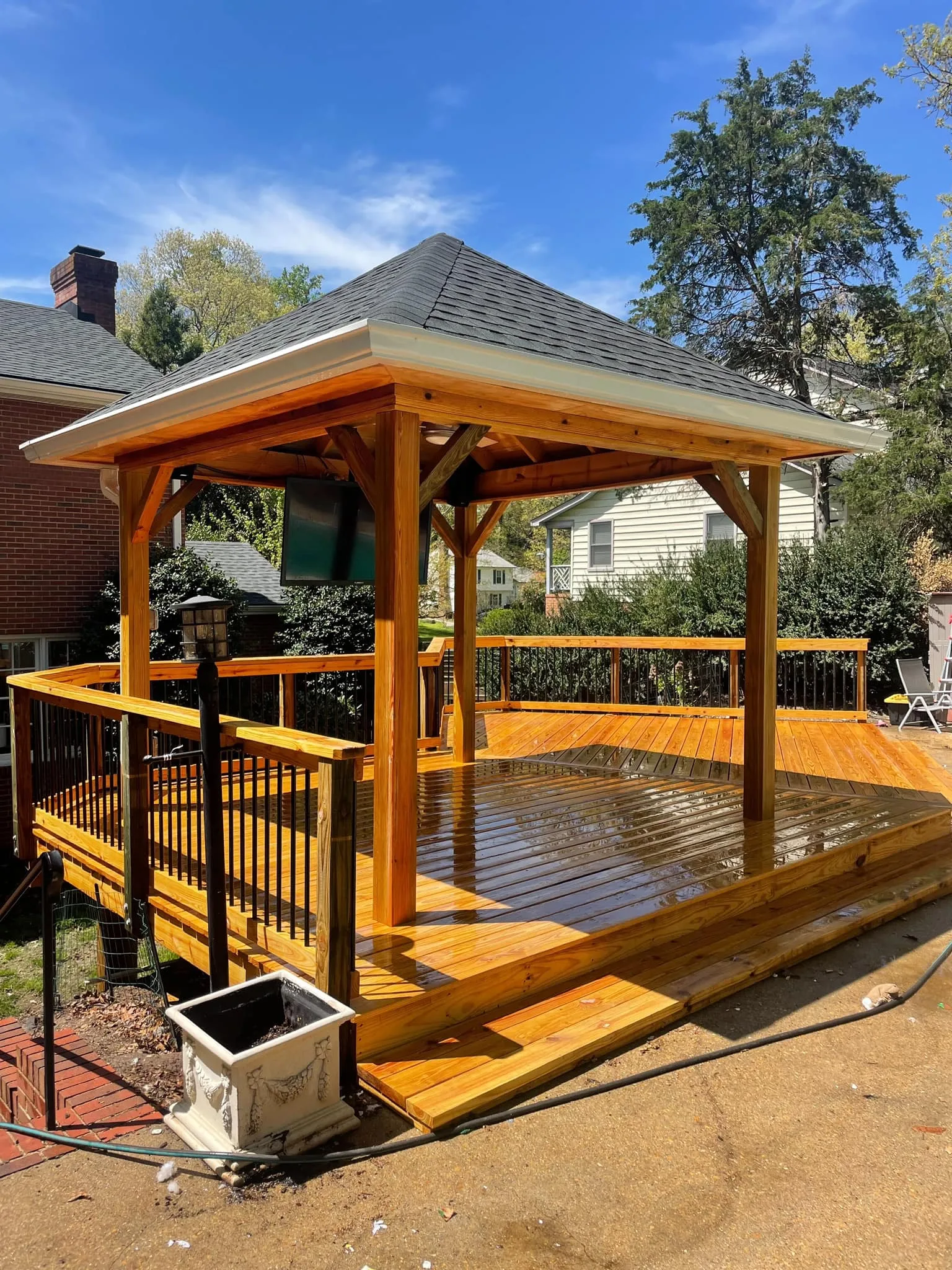
Building a pergola in Virginia Beach demands a strong focus on wind resistance and safety, given the area’s coastal exposure to high winds, salt spray, and intense UV radiation. A pergola here is not just a decorative feature—it is a structural element that must be engineered to withstand hurricane-force gusts and comply with strict local building codes.
At Chesterfield Fencing & More, we help homeowners design and install pergolas built specifically for Virginia Beach’s coastal environment. This guide prioritizes risk prevention, explaining why pergolas fail in high winds and how proper material selection, structural design, anchoring, and professional installation are essential for long-term safety and durability.
Wind is a significant factor because Virginia Beach regularly experiences intense coastal wind pressures, especially during tropical storms and hurricanes. These winds create uplift and lateral forces that can cause pergolas to rack, lift, or collapse if not properly engineered.
Coastal wind exposure directly influences post sizing, connection strength, anchoring depth, and overall structural design. Ignoring wind forces significantly increases the risk of property damage and safety hazards.
Yes, pergolas in Virginia Beach must meet specific wind ratings and comply with the Virginia Construction Code (VCC). Even open-air structures are subject to wind-load requirements set forth in ASCE 7-16.
These requirements govern everything from post dimensions to anchoring methods. Noncompliant pergolas may fail inspections, void insurance coverage, or suffer structural failure during storms.
Virginia Beach enforces the VCC, which references ASCE 7-16 to determine required wind loads based on location, exposure, and structure type. Most residential pergolas fall under Risk Category II, but beachfront or elevated properties often require higher design wind speeds.
Wind exposure category, structure height, and surrounding terrain all affect required uplift resistance. In many cases, engineered drawings and sealed calculations are necessary for permit approval.
Pergolas in coastal Virginia Beach are typically designed for basic wind speeds between 115 and 140 mph, depending on exposure and elevation. These speeds translate into calculated uplift and lateral pressures that dictate framing, fasteners, and foundation design.
For example, a freestanding pergola near the ocean may require deeper footings, reinforced connections, and upgraded materials to safely resist uplift forces.
Powder-coated aluminum and marine-grade steel perform best in Virginia Beach’s high-wind coastal environment. These materials offer superior strength, corrosion resistance, and long-term durability when correctly specified and installed.
Material choice plays a significant role in whether a pergola survives extreme weather or becomes a failure point during storms.
Aluminum pergolas are ideal for Virginia Beach because aluminum does not rust and performs well in salt-air environments. High-quality powder coatings protect against corrosion and UV damage, while aluminum’s strength-to-weight ratio allows for engineered wind-rated designs.
When paired with 316 stainless steel fasteners, aluminum pergolas offer excellent long-term performance with minimal maintenance—essential in Tidewater conditions.
Pressure-treated wood pergolas provide a traditional look but present a higher risk in coastal wind zones without extensive engineering and maintenance. Wood absorbs moisture, degrades under UV exposure, and accelerates fastener corrosion in salt air.
Key risks include:
Vinyl pergolas resist rot and insects but often lack sufficient stiffness for high-wind coastal applications unless heavily reinforced. Unreinforced vinyl can flex excessively under wind pressure, leading to deformation or failure.
To meet coastal wind requirements, vinyl pergolas require internal steel or aluminum reinforcement, which increases complexity and cost.
Yes. For most Virginia Beach applications, aluminum pergolas outperform wood in wind resistance, durability, and maintenance. Aluminum resists salt-air corrosion, maintains structural integrity over time, and integrates well with engineered anchoring systems.
Wood pergolas require ongoing maintenance and remain vulnerable to moisture-driven degradation and fastener failure in coastal conditions.
Salt air accelerates corrosion, moisture retention, and material breakdown. This environment rapidly degrades unprotected metals, fasteners, and organic materials like wood.
To counteract salt exposure, pergolas must use marine-grade materials, corrosion-resistant coatings, and stainless steel hardware designed for coastal conditions.
Wind-resistant pergolas require anchoring systems that transfer uplift and lateral forces into a stable foundation. This typically involves concrete piers, helical piles, or engineered slab connections.
Creating a continuous load path—from roof elements to the foundation—is critical for preventing uplift and racking during storms.
Anchor selection must align with engineered wind calculations and soil conditions.
Only prefab pergolas that are specifically wind-rated and code-certified can withstand Virginia Beach conditions. Most generic kits are not designed for coastal hurricane loads.
Always verify wind ratings, structural calculations, and compliance with ASCE 7-16 and the VCC before considering a prefab system.
Wind-resistant pergolas minimize sail area, use continuous load paths, and incorporate reinforced connections. Design decisions significantly impact how wind forces are distributed and resisted.
Both designs can be wind-rated when properly engineered.
Orienting pergolas to reduce exposure to prevailing winds and spacing slats to allow airflow lowers uplift pressures. Cross-bracing, gusset plates, and through-bolted connections further improve performance.
Homeowners should ask:
Yes. Professional installation is essential for safety, compliance, and durability in Virginia Beach. DIY or non-engineered pergolas present a serious risk in high-wind environments.
Working with a coastal-experienced contractor ensures:
A pergola built for coastal durability protects your home, your investment, and your family. For wind-rated pergola design and installation tailored to Virginia Beach conditions, homeowners can rely on Chesterfield Fencing & More for local expertise and professional guidance.