What Fence Works Best for Sloped Yards in Richmond?
May 20, 2026
|
by Chesterfield Fencing
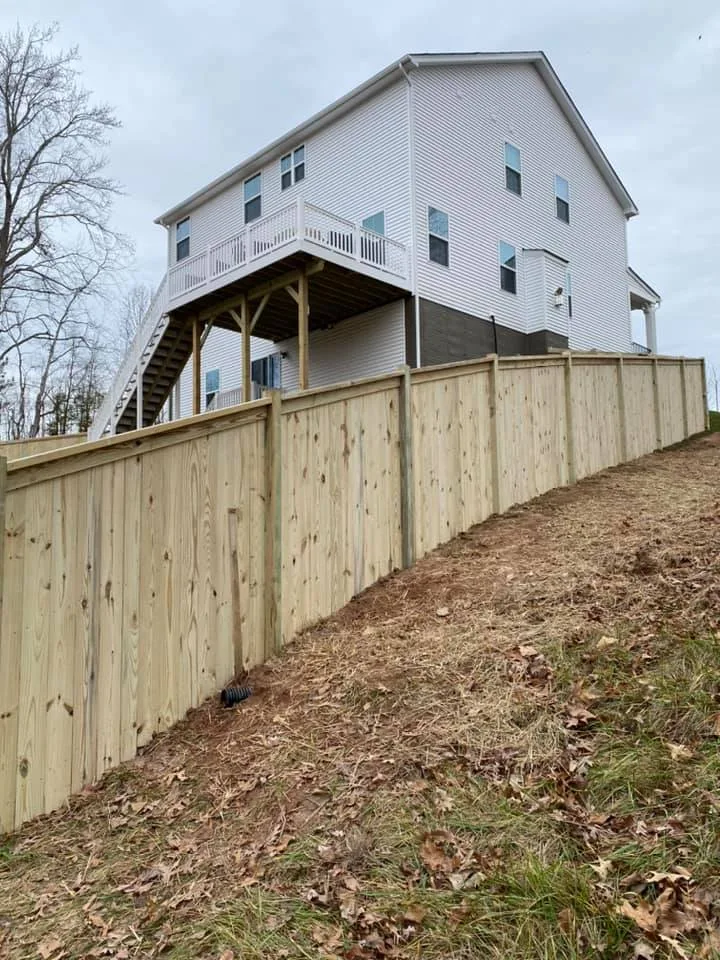
Fencing a sloped yard requires different installation methods than fencing flat ground. If your slope holds water after storms or has sharp elevation changes, selecting the right fence and installation approach is critical to avoid common problems like leaning sections, gaps beneath panels, or soil washing away from posts. While many homeowners focus on appearance first, slope drainage and post stability usually determine how well the fence performs over time. This article guides you through the realities of fencing on slopes in Richmond, highlighting common failure points, drainage challenges, and installation tips that ensure durability and stability.
Which Fence Types Are Most Suitable for Sloped Yards in Richmond?
When dealing with sloped yards, some fence types handle uneven terrain better than others. Your main options include:
Racked Fences: Best for gentle slopes, these fences follow the land’s contour, offering a seamless look while maintaining stability.
Stepped Fences: Ideal for steep slopes, these are installed in horizontal sections, creating a staircase effect that accommodates elevation changes.
Combination Techniques: For moderate slopes, combining racked and stepped methods balances aesthetic appeal with structural integrity.
Choosing the right style helps your fence look great and withstand the challenges of uneven ground.
Common Failure Examples on Sloped Yards
Many sloped-yard fences start developing uneven gaps beneath panels within a few years when erosion washes soil away from the posts. For example, after heavy Richmond rainstorms, water flowing downhill can gradually erode the soil around fence posts, weakening their foundations and causing panels to shift or sag. Freeze/thaw cycles can worsen soil movement, further destabilizing the fence. Without proper post depth and reinforcement, fences on steep grades may lean or collapse under lateral soil pressure. Many homeowners underestimate how much slope drainage affects long-term fence stability, which is why understanding these challenges before installation is essential.
Installation Guidance
Proper installation is key to a fence that lasts on a slope. Here’s what you need to focus on:
Ground Preparation: Prepare the land by leveling spots as needed, grading to direct water away from posts, or adding support structures like retaining walls.
Managing Water Flow and Soil Stability: Installing drainage channels or retaining walls helps control water movement and prevents soil from washing away around posts.
Post Depth and Reinforcement: Posts on steep slopes should be set deeper than usual—below the frost line—and secured with concrete footers to resist shifting and lateral pressure.
Local Regulations: Check Richmond’s zoning laws for fence height and placement to ensure compliance.
For best results, consider hiring a professional installer. Chesterfield Fencing and More LLC specializes in residential and commercial fence installation for Richmond properties, bringing experience with slope drainage, reinforcement, and challenges posed by uneven terrain.
Material Considerations
Choosing the right materials is especially important for sloped yards. Here’s a quick overview:
Minimal maintenance but limited privacy and visual appeal
Understanding these traits helps you pick the best fit for your yard’s needs.
How Do Wood, Vinyl, and Chain Link Fences Perform on Uneven Terrain?
Each fence type behaves differently on slopes:
Wood Fences: Attractive but may need extra support on steep slopes to prevent warping or leaning. Posts must be set deeply and reinforced to withstand soil pressure and erosion.
Vinyl Fences: Durable and adaptable to uneven ground, making them popular for slopes. Proper post installation remains crucial to avoid shifting.
Chain Link Fences: Flexible and easy to adjust to slopes, but they offer limited privacy and less visual appeal compared to other materials.
Knowing these differences helps you choose the right fence for your yard’s terrain and privacy needs.
What Are the Benefits of Each Fence Type for Sloped Yard Stability?
Your fence’s stability depends on both material and installation. Here’s how each type supports your sloped yard:
Wood Fences: Provide strong stability when posts are reinforced and set in concrete footers that resist soil movement.
Vinyl Fences: Low maintenance and durable, offering reliable long-term stability on slopes.
Chain Link Fences: Their flexibility allows easy adjustments, helping them stay stable on uneven ground despite limited privacy.
Choosing the right fence type can greatly improve your installation’s durability.
What Installation Techniques Ensure Durable Fences on Sloped and Uneven Ground?
To keep your fence durable on slopes, focus on these techniques:
Post Installation: Use concrete footers and set posts deeper than usual to counteract soil pressure and freeze/thaw effects.
Material Selection: Pick materials suited to withstand weather and slope challenges.
Ground Preparation: Grade the land properly to prevent future stability and erosion problems.
These steps are essential for a fence that lasts.
How Do Stepped and Racked Fence Installations Adapt to Slopes?
Both installation styles have their strengths:
Stepped Installations: Work well on steep slopes by creating flat sections that match elevation changes, reducing soil pressure on posts and erosion risks.
Racked Installations: Follow the land’s slope for a smooth look, but require precise post spacing and reinforcement to handle uneven soil pressure.
Understanding these options helps you pick the best fit for your yard.
When Is Retaining-Wall Integration Recommended for Sloped-Yard Fences?
Adding a retaining wall can boost fence stability, especially when:
Controlling Erosion: Retaining walls stabilize soil and reduce the impact of water flow, which is common on slopes.
Leveling Ground: They create flat areas for easier, more secure fence installation, particularly on steep grades where posts alone may not suffice.
Consult a professional to see if this approach suits your project.
How Can Richmond Homeowners Choose Professional Fence Installers for Sloped Yards?
Picking the right installer is key. Here’s what to look for:
Experience with Slopes: Contractors should understand uneven terrain, soil movement, and drainage challenges.
Local Knowledge: They must be familiar with Richmond’s zoning laws and regulations.
Proven Track Record: Ask for references and examples of past projects.
What Should You Expect from Expert Fence Installation Services in Richmond?
When hiring professionals, expect:
Qualified Installers: Teams experienced with various fence types and slope installation techniques.
Clear Installation Plans: Detailed timelines, materials, and strategies for managing drainage and soil stability.
Responsive Customer Service: Good communication and support throughout your project.
These factors help ensure a smooth, successful installation.
How Do Personalized Consultations and Free Estimates Support Your Project?
Personalized consultations and free estimates offer:
Customized Solutions: Professionals assess your slope, drainage, and soil to recommend the best fence options.
Transparent Pricing: Free estimates clarify costs, helping you budget effectively.
Expert Advice: Guidance on materials and installation tailored to your yard’s unique needs.
These services keep you informed and confident throughout your fencing project.
What Are the Cost and Maintenance Considerations for Fencing Sloped Yards in Richmond?
When planning your budget, consider:
Material Costs: Prices vary widely; wood tends to be pricier than chain link.
Durability and Upkeep: Some materials require more maintenance, which affects long-term expenses.
Installation Complexity: Slopes often require extra labor for ground prep, post reinforcement, and erosion control, increasing costs.
Knowing these factors helps you make informed decisions.
How Do Fence Types and Installation Methods Affect Pricing?
Fence type and installation style impact your total cost:
Material Prices: Different materials come at different price points.
Maintenance: Some fences require more frequent upkeep, adding to long-term costs.
Being aware of these helps you plan your budget wisely.
Secure Your Sloped Yard with Expert Fence Installation
Sloped yards create challenges that flat properties don’t, especially when drainage, erosion, and long-term soil movement are involved. Choosing the right fence style is only part of the process—proper post depth, reinforcement, grading, and installation technique all play a major role in how well the fence performs over time.
Choosing the right fence and installation method for your Richmond sloped yard helps prevent issues like soil loss, leaning posts, and drainage problems. Trust Chesterfield Fencing and More LLC for tailored solutions that address your yard’s unique challenges. Their experienced team offers personalized consultations and free estimates to help you make confident decisions and ensure a durable, attractive fence built to handle Richmond’s uneven terrain for years to come.